
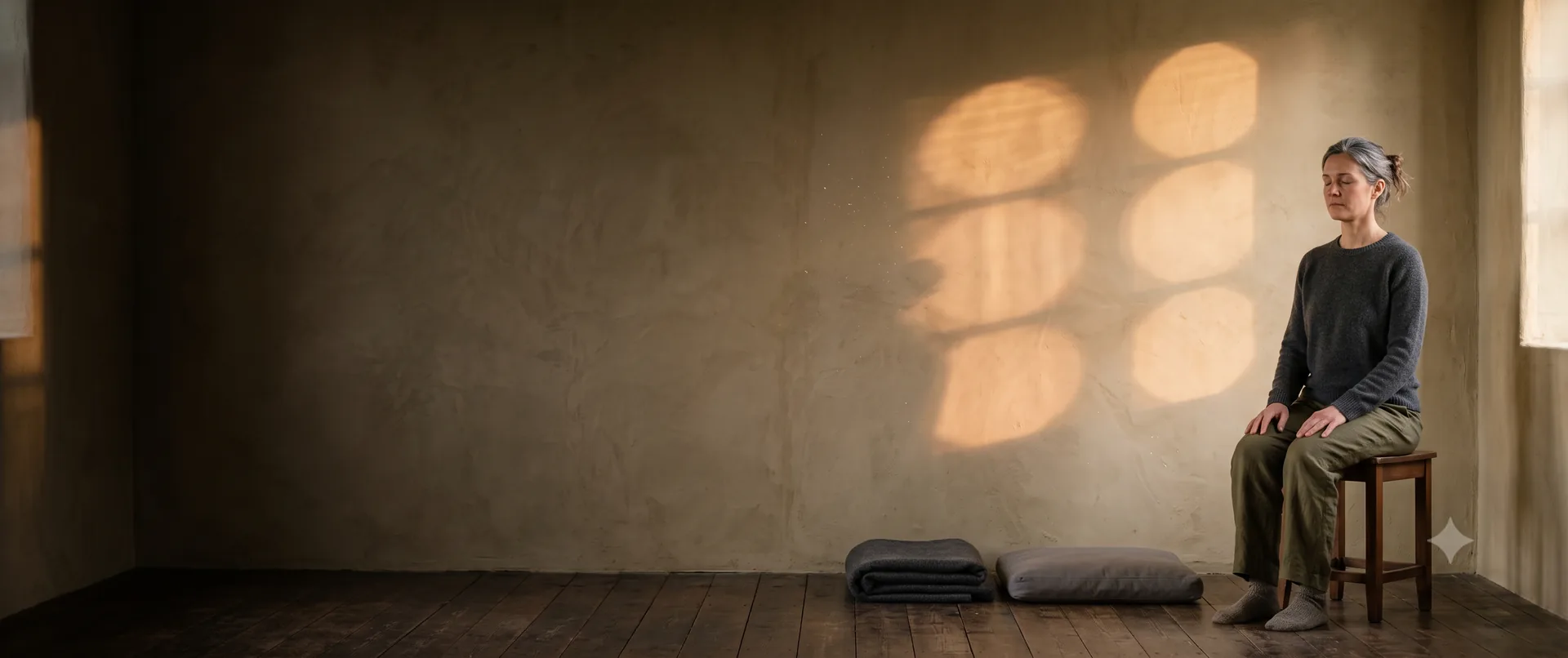
You do not need a quieter mind to begin. You need a practice you can return to.
Guided meditation for people who find it difficult to switch off, sit still, or know where to begin.
Meditation & Mindfulness
Guided sessions that meet you where you are — whether that is complete beginner, lapsed practitioner, or someone who meditates regularly but wants depth and structure. Not a recording. Not an app. A practitioner who adapts the practice to you in real time.
- Format
- Live 1:1 online
- Cadence
- 45-minute sessions
- Practice
- Personalised to your level
- For groups
- Up to 10 people
"People tell me they can't meditate because their mind won't stop. That is like saying you can't go to the gym because you're not fit. The busy mind is not the obstacle — it is the starting point. Every practice I teach begins there."
— Soma Mukherjee

Meditation can feel difficult when your attention has been carrying a full day.
This is for people whose thoughts keep moving after work, who have tried apps without finding a way in, or who want a practice with more personal guidance.
Practising attention.
Meditation is an opportunity to notice where your attention goes and practise returning it to a chosen focus. A wandering mind is part of the practice, not a failure.
Soma offers different starting points, including breath awareness and body scans. You can discuss what feels comfortable and change the practice when needed.
Which of these sounds like you?
No right answers. Just an honest starting point.
"I have tried meditation apps but stop using them within a week."
"My mind is too busy to meditate. I can't stop thinking."
"I meditate occasionally but I'm inconsistent and don't go deep."
"I meditate regularly and want to go deeper with a teacher."
Finding a practice that fits.
Sessions introduce a guided practice, with time to discuss your experience. You do not need to empty your mind or sit in a particular position.
Choose a manageable way to practise between sessions if you wish. There is no promised percentage improvement in attention, sleep or resilience.
The Shape of the Practice
Meditation is an ongoing practice, not a fixed weekly curriculum. It adjusts as your life changes.
Your first session
No previous experience is needed. Discuss your preferences with Soma and try a short guided practice. You can ask questions and choose a comfortable starting point.
The ongoing practice
Choose a rhythm with Soma: weekly, fortnightly or as needed. Adapt the practice to your preferences and circumstances that day.
The progression
Review your experience over time. You may choose to change the technique, length or frequency; there is no set progression or guaranteed change in sleep or focus.
After a structured programme
If you have completed another programme, discuss which practices you would like to continue. Ongoing meditation sessions are optional.
"The ever-smiling Soma has been the fitness guru of the TRDDC/TCS family for over a decade. Besides helping people with their daily routine of Yoga through her excellent teaching methods, she has also provided excellent advice and helped many people overcome fitness-related problems. Her affable personality is her greatest strength."
— BP GauthamChief Scientist, TCS Research
Schedules and Investment
Individual
4-session pack: $279
- Format1:1 with Soma · Zoom
- Length45 minutes
- FrequencyWeekly, fortnightly, or as needed
- Pranayama, mindfulness, Yoga Nidra & body scan
- Adapted to you each session
- Post-session practice note
- Optional home-practice guidance
Corporate Group
Weekly sessions for up to 10 people
- FormatGroup (up to 10) · Zoom
- Length45 minutes
- FrequencyWeekly, ongoing
- BillingMonthly invoice
- All individual modalities
- Group-adapted practices
- Monthly attendance & engagement summary
First class is free — try before you commit. Paid enrolment is generally non-refundable; unused classes remain available for 12 months. See refund terms
What happens next.
Booking is the start, not the finish. Here is exactly how the programme runs from the moment you confirm.
- 01
Your sessions
Agree the time and session link with Soma.
- 02
A conversation first
Discuss your needs directly with Soma before agreeing the schedule.
- 03
At your pace
Review what is useful and agree any next steps together.
Enrolment & refunds
Your first class is free, so you can decide before paying. Paid enrolment is generally non-refundable, but unused classes remain available for 12 months. Your statutory rights are not affected.